The SaaS desk
Tracking SaaS, seat-based pricing, net revenue retention + 10 more
- SaaS — The category conversation: who says it is dying, who says it is fine, and on what evidence.
- seat-based pricing — The pricing argument AI forces — per-seat, per-usage, per-outcome.
- net revenue retention — The number operators actually run on, and what is happening to it.
- churn — Retention pressure: who is losing customers and to what.
- vertical SaaS — Where software money is moving as horizontal tools commoditise.
- AI-native software — The challengers rebuilding categories, and how incumbents answer.
- ARR — The growth number operators benchmark against, and what is happening to it.
- The Official SaaStr Podcast: SaaS | Founders | Investors
- Lenny's Podcast: Product | Growth | Career
- The SaaS Podcast - SaaS, Startups, Growth Hacking
- Run the Numbers
- The SaaS CFO
- SaaS District
SaaS pricing shifts from per-seat to outcome-based billing








~62 hrs of podcasts, listened to for you. This is the 2-minute version.
150 search results → 49 episodes scanned → 8 made it in · 12 analyzed in full
The shift away from per-seat pricing is no longer theoretical, as Microsoft and agentic CRM providers force a move toward consumption and outcome-based models. While product-led growth remains the gold standard, the consensus among operators is that the median product manager is failing to deliver, necessitating a pivot toward leaner, more technical teams. Your goal of navigating the SaaS-is-dead noise is best served by watching how incumbents like Zapier and Salesforce re-architect their entire go-to-market strategy to survive this transition.

Sep 21 · 69 min
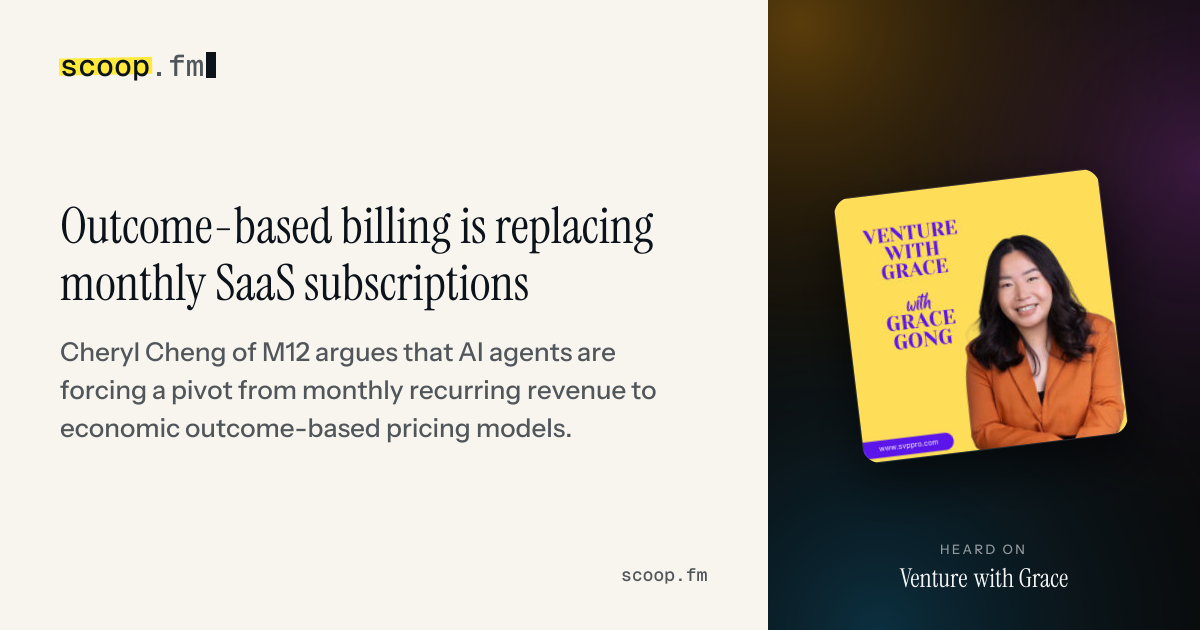
Outcome-based billing is replacing monthly SaaS subscriptions
- Cheryl Cheng notes that AI agentic services are forcing a shift away from traditional monthly SaaS pricing models.
- Cheng argues that SaaS companies must now prove economic outcomes to capture value rather than just charging fees.
- The shift toward AI-native vendors will likely cause enterprises to move away from building internal AI solutions.
Why this matters to you
The transition from per-seat SaaS pricing to outcome-based billing for agentic AI directly impacts how founders must structure their business models and revenue projections.
SaaS
7 episodes · 7 of 22 mentions
Lenny's Podcast: Product | Career | Growth
Sep 20 · 97 min · Top 25 technology
Product management quality is declining as top talent exits
- Peter Sellis argues that most product managers are net negative to companies, as the median skill level falls far below the average.
- Snapchat struggled to build a massive ads business because its camera-first, messaging-centric product lacks natural, high-value inventory for performance advertising.
- Sellis advocates for 'long-term greedy' strategies, prioritizing advertiser ROI over short-term revenue to drive compounding growth and net revenue retention.
Why this matters to you
Understanding how to align product strategy with measurable ROI and retention is critical as AI shifts the value of traditional per-seat SaaS metrics.
“The great product managers are exiting the system. They're becoming founders. They're becoming executives. It's kind of set up to be this profession where the median product manager is actually probably pretty bad.”
— Peter Sellis
Listen Deep dive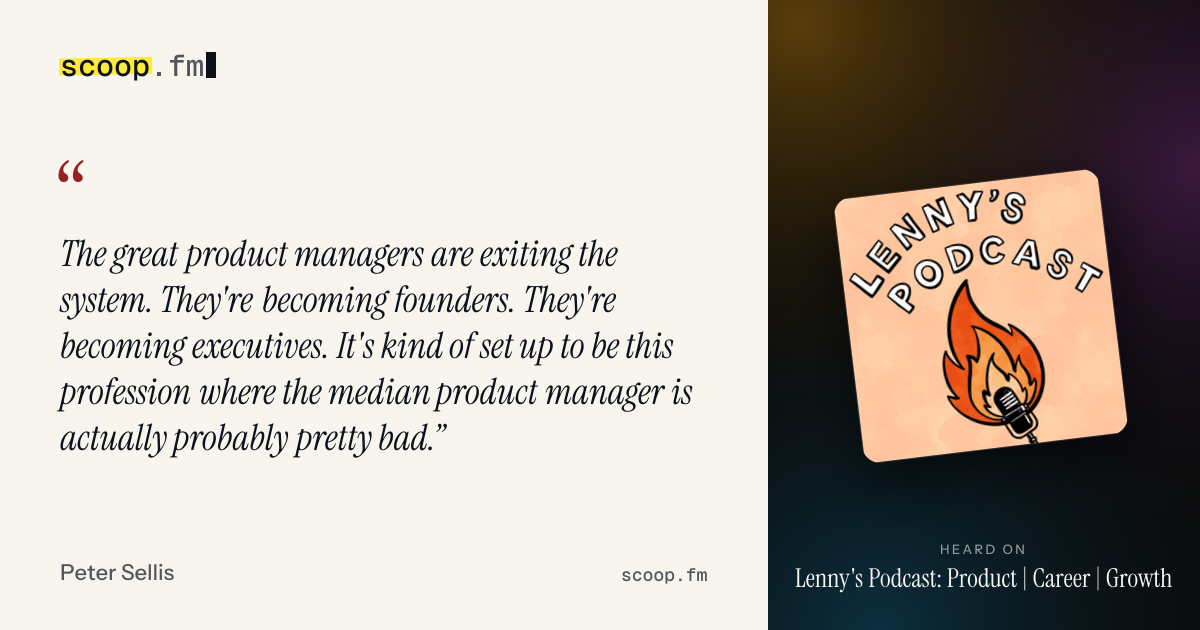

Sep 20 · 67 min
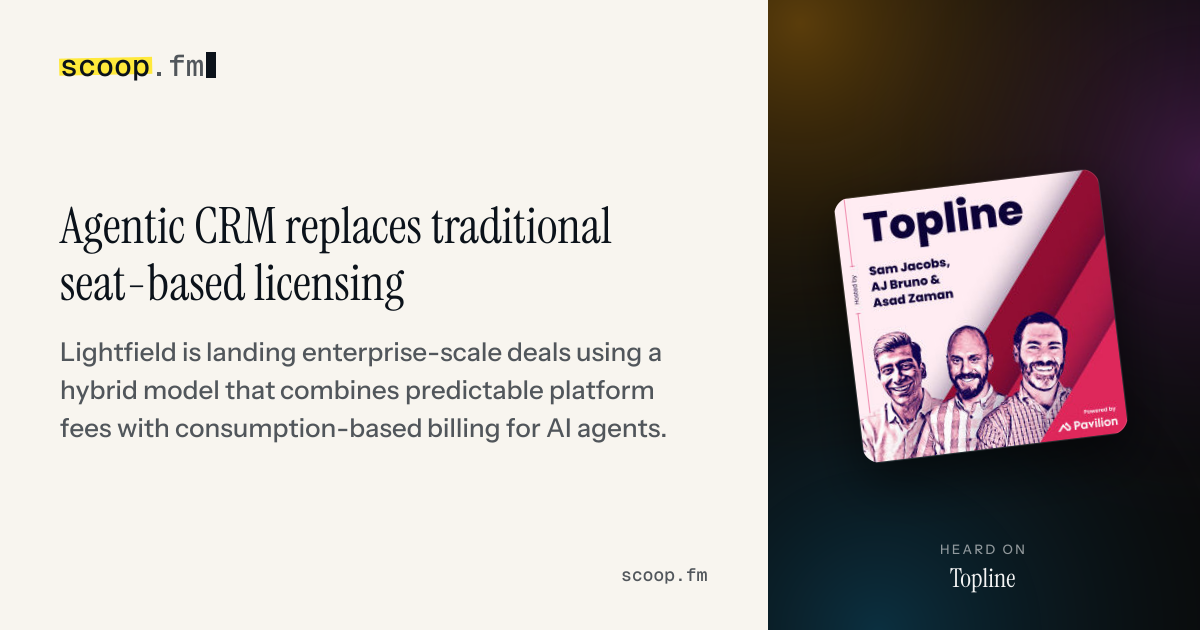
Agentic CRM replaces traditional seat-based licensing
- Keith Peiris claims Lightfield's agentic CRM lands deal sizes for 200-person companies comparable to Salesforce's 5,000-person enterprise accounts.
- The CEO argues that traditional SaaS partner ecosystems are dying because building software has become significantly easier.
- Lightfield uses a hybrid pricing model with predictable platform fees for core CRM and consumption-based billing for AI.
Why this matters to you
The shift toward agentic CRM models suggests that per-seat pricing is being replaced by value-based consumption metrics in high-growth SaaS organizations today.
Sep 20 · 76 min
Microsoft increases pricing while bundling AI capabilities
- Microsoft increased Business Basic pricing from $6 to $7 and Business Standard from $12.50 to $14 per user per month.▶ 00:37:34
- Business Premium remains priced at $22 per user per month, serving as Microsoft's strategic sweet spot for the SMB segment.▶ 00:37:58
- The new E7 enterprise SKU launched at $99 per user per month, integrating Copilot and advanced AI agent management capabilities.▶ 01:05:45
Why this matters to you
Understanding these pricing shifts and SKU bundling strategies is essential for maintaining accurate SaaS margins as AI features force changes to per-seat cost structures.
“Microsoft has no intention of making this simpler overall because this complex licensing landscapes makes it possible for them to do complex enterprise agreements where they control they have a lot of knobs when you're negotiating the next three years of your licensing agreement.”
— Paul Schnackenberg, at 01:08:45
Listen Deep dive
Also mentioned

Episode 450 -- Your Vendor Contract Template Was Not Built for AIStandard SaaS contracts fail to protect AI data · Corruption Crime & Compliance · Listen
Outdated contract templates may implicitly grant AI vendors training rights to your confidential data unless explicitly prohibited.

The Weird Way This Rural Founder Makes $6 Million A YearMeta pivots to B2B SaaS subscription tiers · Female Founder World · Listen
Meta is introducing paid subscription tiers for businesses and creators, signaling a permanent move toward B2B SaaS monetization models.

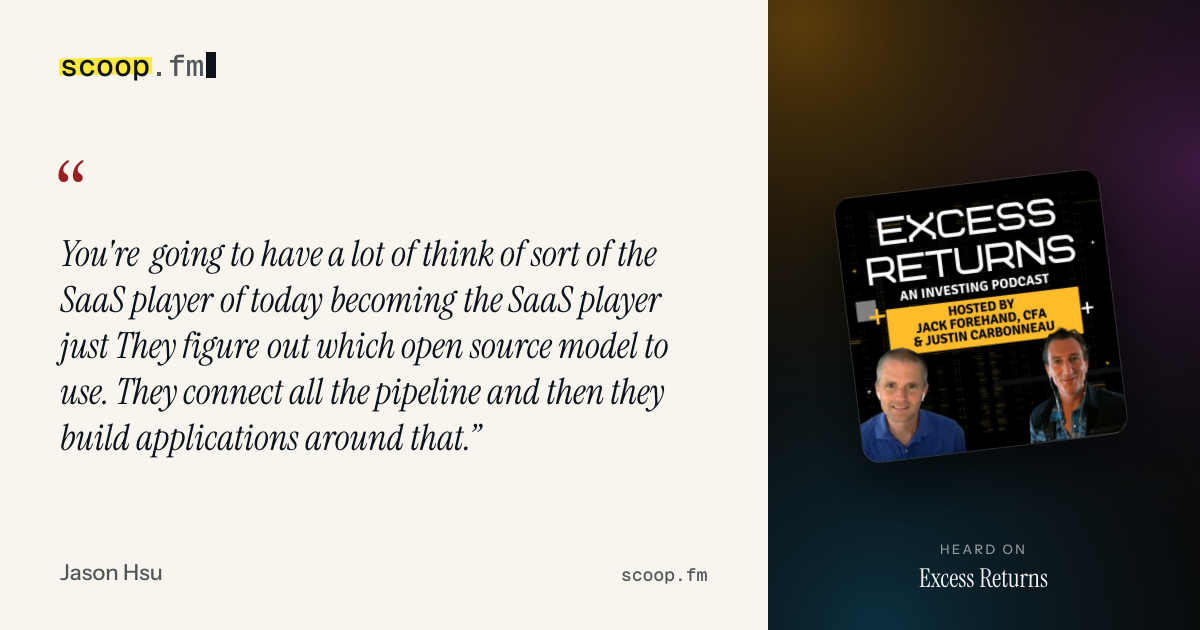
The AI Gap Is Closing | Jason Hsu on China, Momentum Crashes and the S&P’s Seven-Stock BetSaaS players evolving into open-source integrators · Excess Returns · Listen
Jason Hsu suggests that most SaaS value will accrue to hardware and energy providers, while software players become mere integrators.
ARR
1 episode · 2 of 3 mentions
Sep 20 · 49 min
Zapier transitions to enterprise-focused ARR growth
- Zapier has maintained consistent cash flow positive results while scaling from 100 to 800 employees.
- The company uses a long-range plan to track ARR, churn, and contraction through the decade.
- Zapier is shifting its go-to-market strategy to serve enterprise customers and move up-market for growth.
Why this matters to you
Understanding how a bootstrapped, product-led company transitions to enterprise sales provides a blueprint for managing ARR growth during a shift in business model.
“I'm going to take the entire history of Zapier, every major product decision we've made over the years and all the growth metrics, all the financials, and I'm going to put them together and create a story that tells anybody who came to Zapier today or years from now so they understand how we got to this moment in time.”
— Ryan Rakan
Listen Deep dive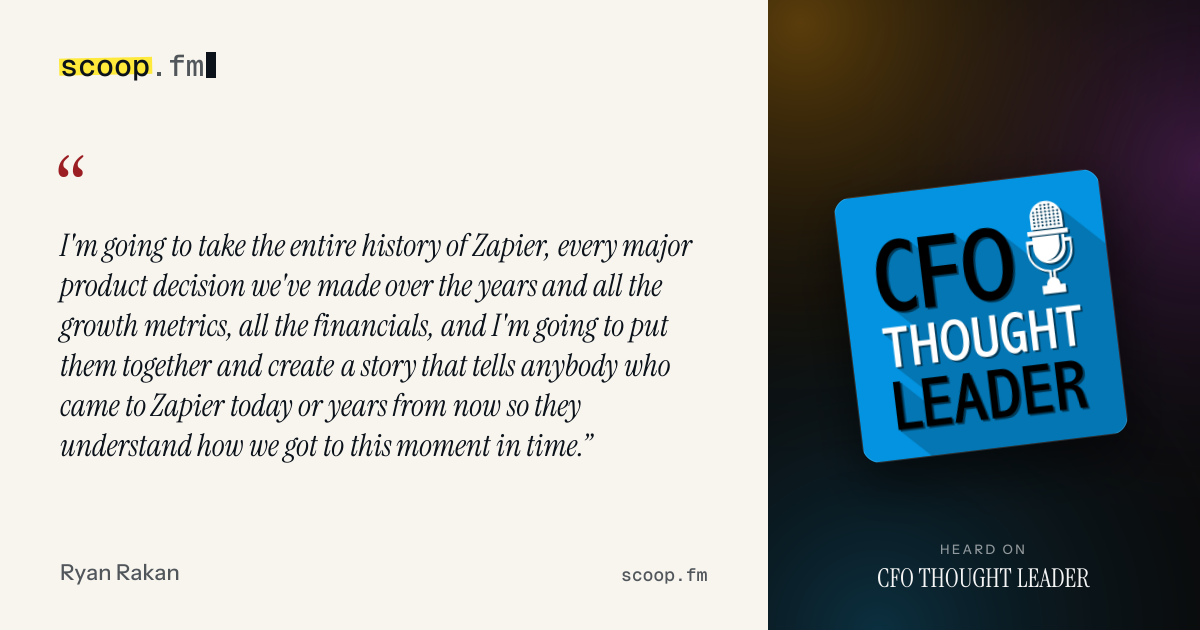
Make it yours
Start from these trackers
Copy its trackers, shows and tone into a page of your own. Change anything — this page isn’t touched.
Make it mine