The SaaS desk
Tracking SaaS, seat-based pricing, net revenue retention + 10 more
- SaaS — The category conversation: who says it is dying, who says it is fine, and on what evidence.
- seat-based pricing — The pricing argument AI forces — per-seat, per-usage, per-outcome.
- net revenue retention — The number operators actually run on, and what is happening to it.
- churn — Retention pressure: who is losing customers and to what.
- vertical SaaS — Where software money is moving as horizontal tools commoditise.
- AI-native software — The challengers rebuilding categories, and how incumbents answer.
- ARR — The growth number operators benchmark against, and what is happening to it.
- The Official SaaStr Podcast: SaaS | Founders | Investors
- Lenny's Podcast: Product | Growth | Career
- The SaaS Podcast - SaaS, Startups, Growth Hacking
- Run the Numbers
- The SaaS CFO
- SaaS District
SaaS pivots from feature-based utility to defensible methodology







~59 hrs of podcasts, listened to for you. This is the 2-minute version.
194 search results → 68 episodes scanned → 22 made it in · 24 analyzed in full
The industry is moving from conversational AI experiments to programmatic utility, forcing a divergence between those building commodity features and those creating defensible methodology. While SaaS revenue continues to scale—with Anthropic and Clay projecting massive ARR growth—the market is increasingly punishing companies that lack a unique point of view or fail to manage capital-intensive churn.

Sep 21 · 70 min · Top 100 business
Methodology as the ultimate SaaS moat
- Nicholas Cole argues that SaaS companies maintain a competitive moat by building products around a distinct point of view rather than just commodity features.
- The speakers claim that SaaS products lacking a unique methodology are easily commoditized, making them vulnerable to AI-driven competition and generic feature replication.
- Founders are encouraged to treat their content library as a digital brain, using AI to repeat their unique perspectives rather than generating generic slop.
Why this matters to you
Differentiating between commodity features and methodology-driven platforms provides a framework for maintaining pricing power and defensibility as AI erodes traditional software value.
SaaS has a moat when you have a point of view. ... If you're just building commodity SaaS, meaning like you're just providing features that accomplish tasks to people, that's fundamentally a commodity.”
— Nicholas Cole
Listen Deep dive
SaaS
8 episodes · 8 of 19 mentions
Attributed - A podcast by Dreamdata
Sep 22 · 54 min
Distribution-led dominance replaces product-led growth
- Katelyn Bourgoin notes that SaaS founders often struggle with intense competition and the ease with which competitors can copy successful software products.
- Bourgoin argues that when software is easily replicated, the winner is the company with the most distribution and a compelling, ownable argument.
- April Dunford is cited as a leading expert whose positioning frameworks were specifically designed to help B2B SaaS companies differentiate their offerings.
Why this matters to you
The shift from product-led growth to distribution-led dominance forces a revaluation of how SaaS companies allocate resources between development and brand-building.
“if you actually build software that's working and the people want and it solves a problem, guess how quick it is for somebody to copy you and spin up their own version of that. Right. And guess who wins? The person with the most distribution.”
— Katelyn Bourgoin
Listen Deep dive

Latent Space: The AI Engineer Podcast
Sep 21 · 141 min · Top 25 technology
The coming inverse SaaS-apocalypse
- Diogo Almeida argues that SaaS businesses will be supercharged by AI as they identify economically valuable automation tasks.
- The CEO claims that current SaaS models are largely unchanged despite AI, but predicts an upcoming inverse SaaS-apocalypse.
- Almeida asserts that AI should function as a reliable database-like utility rather than a conversational coworker for software.
Why this matters to you
The shift from conversational interfaces to programmatic, reliable AI utilities suggests a fundamental change in how SaaS pricing and seat-based value will be calculated.
“I think it's going to be like an inverse SaaSpocalypse. I think SaaS is going to be supercharged by this. They're the ones who are like most in the know of what things are valuable to automate.”
— Diogo Almeida
Listen Deep dive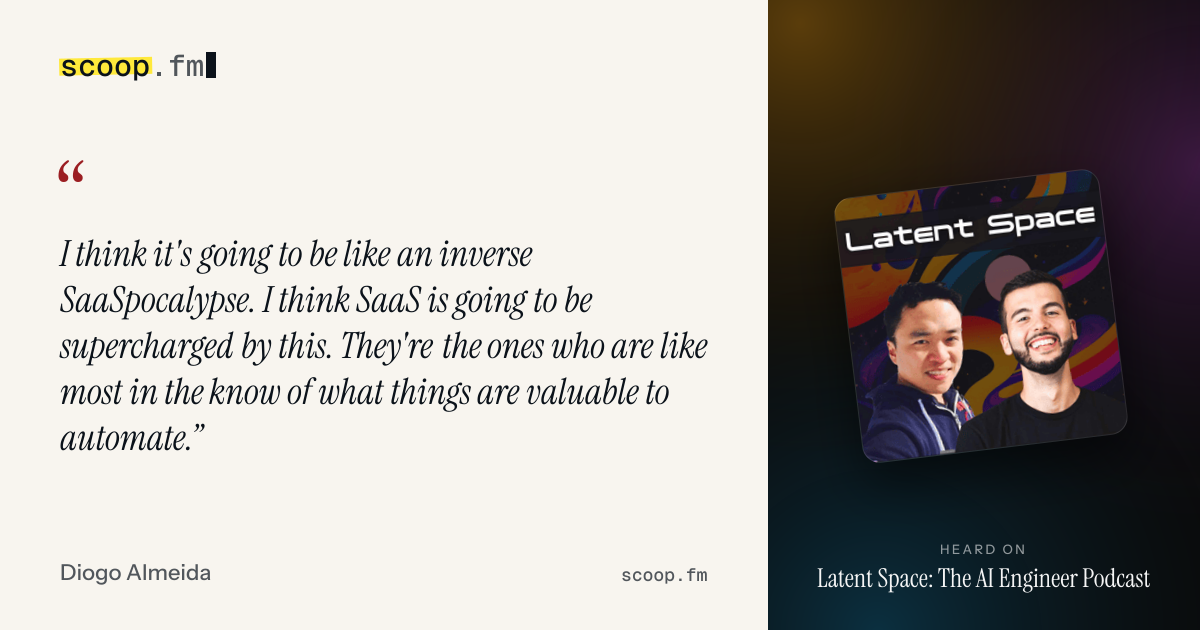
Also mentioned

Eclipse's Lior Susan on $12.5B AUM and the Bet on Physical IndustriesPhysical industries challenge SaaS valuation models · Sourcery · Listen
Lior Susan argues that SaaS growth was often masked by accounting tricks, suggesting physical industries offer better long-term multiples than high-margin software.
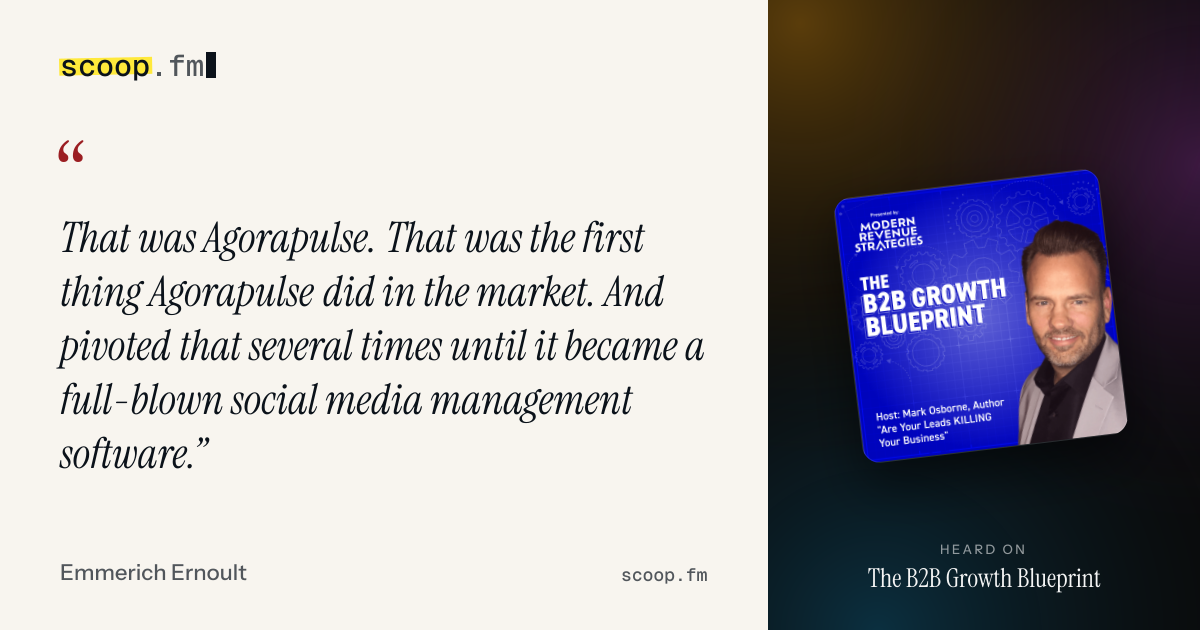
How to Build Real Accountability in Your Team (Beyond EOS & OKRs) with EMERIC ERNOULTPivot from services to scalable SaaS · The B2B Growth Blueprint · Listen
Emmerich Ernoult details his transition from bespoke contest apps to a self-serve platform, highlighting the need for multiple pivots to reach scalable software.

How to Dominate Manufacturing in the US | Chris Power, HadrianCapEx divergence between SaaS and manufacturing · Relentless · Listen
Manufacturing founders note that traditional SaaS metrics fail in capital-intensive industries because SaaS carries almost no CapEx requirements.

#378 The Data Engine for AI with Ledion Bitincka, CTO at Cribl & Nikhil Mungel, Head of AI R&D at CriblTelemetry data as an upsell signal · DataFramed · Listen
Cribl uses telemetry data to identify upsell signals, reflecting a shift toward custom internal applications over standard SaaS platforms.

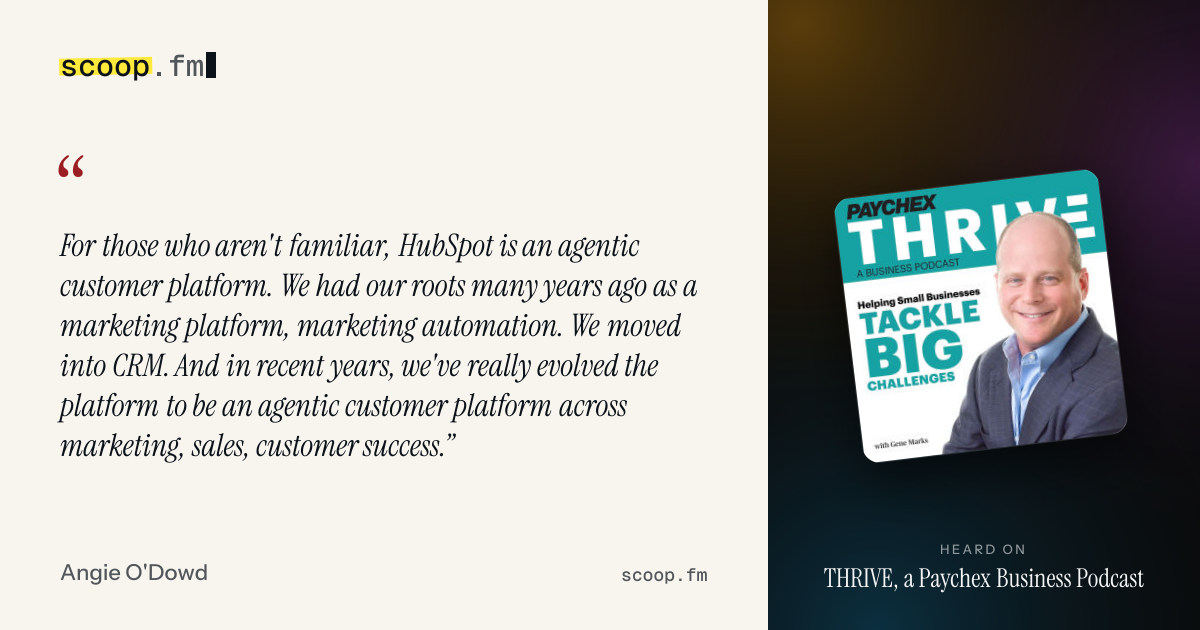
How Data, Adoption, and Agentic Tools Deliver Business Value — with HubSpot’s Angie O’DowdHubSpot shifts to agentic customer platform · THRIVE, a Paychex Business Podcast · Listen
HubSpot has evolved from marketing automation into an agentic customer platform, offering both traditional UI and conversational AI interfaces.
churn
7 episodes · 8 of 18 mentions
Inside the Tech Powering 500K+ Audio Drama Creators | Pocket FM on LightworkPocket FM crosses 500M ARR · Lightwork · Listen
Pocket FM hit 500 million ARR while its new microdrama app, Pocket Saga, reached 15 million ARR in just three months.

4 Ways Group Practice Owners Can Make Data-Driven Decision to Increase Profits and Become Better Leaders [Ep 184]Early-session churn in professional services · The Bad Therapist Show · Listen
Tori Krohn defines churn as client loss before the fourth session, noting that early-career clinicians often outperform seasoned staff in retention.


Why the Hardest Part Starts After Launch: Operators Build (E5)High churn in supplement subscription models · Operators · Listen · Watch
Operators in the powder supplement category face higher churn rates, requiring aggressive subscriber acquisition to maintain viable unit economics.

Building a $150M Marketing Empire & Scaling Thousands of Brands | Erik HubermanAccepting churn as an inevitable baseline · Legends N Leaders · Listen
Erik Huberman advises that businesses should treat churn as an unavoidable reality, focusing instead on simplifying their value proposition to retain clients longer.

The Hidden Northern Gold Coast Pockets Buyers Should WatchAsset resilience despite market sentiment · Buying Gold Coast · Listen
Duplex properties in Labrador have remained resilient in value despite broader market concerns regarding overcapitalization and negative equity.


Northwest Division Preview (with Adam Mares)Financial constraints driving team churn · RealGM Radio · Listen
The Oklahoma City Thunder are shedding talent due to league financial rules, illustrating how external constraints force retention trade-offs.

The "Permabear" Holds 50% Stocks. 7 Sectors Barely Grew. What If Stocks Stop Carrying the Economy?Employee satisfaction as a retention factor · Two Quants and a Financial Planner · Listen
Companies with high employee satisfaction significantly outperform peers, as high labor turnover directly reduces bottom-line profitability.
ARR
6 episodes · 7 of 10 mentions
Sep 21 · 46 min
Clay targets 240M ARR
- Clay CEO Kareem Amin confirmed the company is currently targeting $240 million in ARR for this year.
- The company plans to double its ARR next year, according to statements made by CEO Kareem Amin.
- Kareem Amin noted that Clay is currently scaling its enterprise sales motion alongside its existing PLG motion.
Why this matters to you
The aggressive growth targets demonstrate how AI-native sales platforms are scaling revenue despite shifting enterprise software spending and per-seat pricing models.
“I saw the reporting that you guys are targeting 240 million in ARR for this year. You're looking to double it next year. Is that right? Yeah, that's right.”
— Akash Pastrucha and Kareem Amin
Listen Deep dive
Also mentioned

Pacing the Frontier: What’s next for AI?AI Lab revenue reaches 200 billion annually · Barclays Brief · Listen
AI Lab ARR is projected to hit 200 billion this year, though future safety and monitoring costs may force higher token prices for end users.

How Vanta Won 600 Customers Without a Website and Grew to $300M ARRVanta scales to 300M ARR · Brydge Club by Ruffin Mitchener · Listen
Vanta reached 300 million ARR by April 2026, demonstrating that delaying institutional capital until 10 million ARR can maximize founder leverage.

Rates, BTC AI Convergence, BTC Risk Outlook | BMTV Sep. 21, 2026Bitcoin accumulation as a risk benchmark · Bitcoin Magazine Podcast · Listen
Strive is aggressively accumulating Bitcoin, underwriting a 25% to 50% CAGR over four years as a core capital allocation strategy.


Don't Let Your First Hire BackfireRecurring revenue drives enterprise value · Freelance to Founder · Listen
Brian Samson notes that recurring revenue models significantly improve exit valuations compared to project-based services, favoring founders planning long-term exits.

Evening Market Recap - Monday, 21-SepAnthropic projected to hit 100B ARR · FactSet Evening Market Recap · Listen
Anthropic is expected to reach an ARR of over 100 billion by the end of 2026 amid new model releases.
Run the Numbers
1 episode · 1 mention
Sep 21 · 51 min
Media valuation shifts to programmable revenue
- Media companies are increasingly valued on repeatable, programmable, and scalable subscription revenue rather than volatile advertising or events.
- Bending Spoons acquired AOL for four times EBITDA and saw its valuation rise to 16 times EBITDA within six months.
- Media businesses often struggle to align content creation, audience growth, and monetization, leading to high decay rates for content assets.
Why this matters to you
Shifting from ad-based models to scalable subscription and data-driven revenue streams dictates the long-term enterprise value and exit potential of modern software-adjacent media.
“What you want to beat the drum when you're looking at media companies is like what's repeatable, programmable, and scalable.”
— Blake Saunders
Listen Deep dive
Make it yours
Start from these trackers
Copy its trackers, shows and tone into a page of your own. Change anything — this page isn’t touched.
Make it mine