Sept 13: Why being incredibly boring fixes bedtime
Good morning. Sometimes the most effective boundary is simply removing your own reaction.
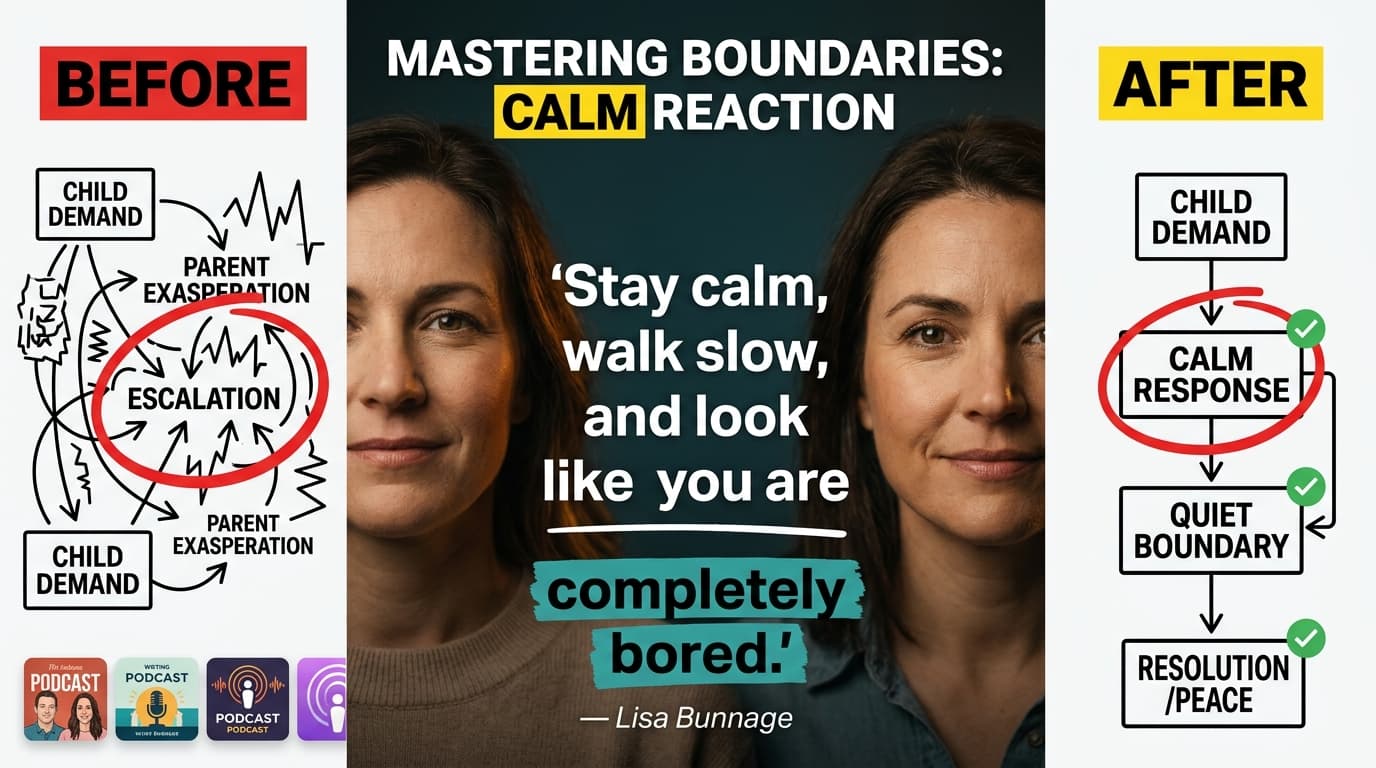
Parenting coach Lisa Bunnage argues that we inadvertently reward toddler bedtime stalling with our attention. Her solution is the silent return method: when they leave their bed, walk them back slowly without eye contact or conversation. By becoming incredibly boring, you remove the incentive to keep getting up.
Little kids pick
A concrete, zero-engagement strategy to break the cycle of toddler bedtime stalling by removing the verbal and visual payoff they crave.
Discipline
The silent return method for bedtime stalling
When a toddler repeatedly leaves their bed, walk them back slowly and silently without eye contact to make the interaction completely unrewarding.
Why it matters: Toddlers will repeat behaviors that elicit a reaction; removing verbal and visual engagement breaks the cycle of bedtime games.

For: Parents of toddlers transitioning to a floor bed or toddler bed
“the third time and every time after that you don't talk to him you don't look at him you just keep putting him back to bed stay calm walk slow look like you're bored”
ApproachParents often inadvertently reward bedtime stalling with attention. Becoming incredibly boring removes the incentive to keep getting up.
Should You Discipline a Tired Child · Sep 1, 2026
Big kids pick
A brilliant, non-emotional framework that uses chemistry to help teens depersonalize the painful experience of being iced out by a friend group.
Relationships
Chemical compound metaphor for friendship exclusion
Help a teen dropped by friends take it less personally by comparing the clique to a chemical compound that kicked out an atom to stabilize.
Why it matters: Provides a logical, non-emotional framework for a highly emotional adolescent experience.

For: Parents of teens who have been iced out of a friend group
“think about social groups as almost like chemical compounds... they decided, oh, I know how to stabilize. Let's kick out that atom and that will strengthen our bonds.”
ApproachDepersonalizing the rejection shifts the focus from the child's perceived flaws to the group's own insecurity and need for stability.
287: ENCORE: Best of Ask Lisa: Confidence, Self-Esteem & Self-Compassion · Sep 1, 2026
Today's Parenting Tips
Actionable advice distilled from this week's parenting podcasts.
Discipline
The silent return method for bedtime stalling
When a toddler repeatedly leaves their bed, walk them back slowly and silently without eye contact to make the interaction completely unrewarding.
Why it matters: Toddlers will repeat behaviors that elicit a reaction; removing verbal and visual engagement breaks the cycle of bedtime games.
Relationships
Chemical compound metaphor for friendship exclusion
Help a teen dropped by friends take it less personally by comparing the clique to a chemical compound that kicked out an atom to stabilize.
Why it matters: Provides a logical, non-emotional framework for a highly emotional adolescent experience.
Health & Wellness
Toothpick Vegetable Introduction Strategy
Serve a previously rejected vegetable with toothpicks and model stabbing and eating it yourself without pressuring your child to try it.
Why it matters: Direct pressure to eat vegetables usually backfires; playful, low-stakes modeling invites kids to participate on their own terms.

Discipline
Immediate removal for throwing food at the table
When a toddler throws food, skip the warning and immediately remove them from the table to establish a clear boundary.
Why it matters: Toddlers lack the cognitive development to process conditional threats like 'if you do it again', making immediate action the only effective communication.
Discipline
Car seat resistance wait-out
When a toddler goes stiff to avoid the car seat, hold them over it silently until they relax, then quickly buckle them in.
Why it matters: Physical power struggles with toddlers in public settings often cause parents to panic and escalate the situation unnecessarily.
Discipline
Aggressive toddler physical redirection
When a toddler hits, immediately say no, pull them away from the activity, and physically block any subsequent hits to build new muscle memory.
Why it matters: Toddler aggression is a common developmental phase that requires immediate, consistent physical boundaries rather than verbal reasoning.
Emotional Regulation
Reframing OCD treatment goals
Measure progress by your child's ability to tolerate discomfort without performing a compulsion, rather than expecting their intrusive thoughts to disappear entirely.
Why it matters: Misunderstanding the goal of therapy often leads families to abandon effective treatments prematurely when intrusive thoughts inevitably return.

Emotional Regulation
Self-Parenting for Mom Guilt
When you make a parenting mistake, talk to yourself the way you would comfort a middle schooler, starting with, 'First of all, know that I love you.'
Why it matters: Mothers often hold themselves to impossible standards of perfection, leading to burnout and decreased emotional capacity for their kids.

Emotional Regulation
Verbalizing work stress to children
When you come home stressed, explicitly state your emotion ('I'm feeling frazzled') so children don't interpret your negative facial expressions as anger toward them.
Why it matters: Parents often try to hide their stress, but children read the nonverbal cues anyway and internalize them.
Relationships
Reframing polite distance for tween girls
Disabuse your child of the idea that being cordial to someone they dislike is being two-faced by explaining that adults simply call this being polite.
Why it matters: Helps kids maintain peace in shared spaces like classrooms without feeling like they are compromising their integrity.
Special Needs
Interest-Based Task Activation Strategy
To help a neurodivergent child start a dreaded task, change their environment to make the situation novel, such as moving homework to a library.
Why it matters: Understanding that importance does not equal motivation for ADHD brains stops parents from lecturing and shifts focus to environmental design.

Relationships
Clinical distinction between bullying and conflict
Before intervening in peer drama, apply the clinical definition of bullying: it only occurs when a targeted child is entirely unable to defend themselves.
Why it matters: Helps parents accurately assess the severity of social issues before escalating to teachers or other parents.
Health & Wellness
Child-Centered Play Therapy age range
If your child is between 3 and 12 years old, prioritize Child-Centered Play Therapy over cognitive or worksheet-driven approaches that demand abstract reasoning.
Why it matters: Traditional talk therapy requires abstract reasoning that children under 12 typically have not yet developed.

Health & Wellness
Personal time for stress hormone recovery
Schedule time completely free of caregiving; a 2026 study found this genuine personal time leads to healthier stress hormone recovery patterns that same day.
Why it matters: Parents often view personal time as a selfish luxury rather than a biological necessity for stress regulation.
Relationships
Fifty dimensions mental model for peer conflict
When your child reports lunchroom drama, remember they are only sharing two dimensions of a 50-dimension situation, and stick to asking questions rather than intervening.
Why it matters: Encourages a curious, open-minded approach rather than a reactive, fixing mindset.
Communication
The delayed-response conversation rule
When discussing relationship issues with your teen, enforce a strict "listen only" rule and wait a full week to share your response.
Why it matters: Immediate reactions often escalate into arguments; a built-in cooling-off period fosters psychological safety.

Communication
Shifting the trust burden
When teens accuse you of not trusting them, explicitly state that it is their job to earn your trust, not your job to blindly give it.
Why it matters: Adolescents naturally push boundaries and break trust; reframing trust as an earned currency rather than a parental obligation reduces conflict.
Communication
Text-based relationship audits
Text your teen vulnerable questions—like "where do I miss your heart the most?"—because they will often type truths they won't say face-to-face.
Why it matters: Teens are digital natives; leveraging their preferred medium reduces friction for difficult conversations.
Communication
Rephrasing Praise to Build Child Resilience
Instead of telling your child "I am proud of you" after a success, say "you must have worked hard" to prevent learned helplessness.
Why it matters: Parents often default to "I'm proud of you" without realizing it centers the parent's feelings rather than the child's effort.
Discipline
Division of responsibility for screen time
Apply Ellyn Satter's food framework to screens: the adult decides what content is available and when, while the child decides how to use it.
Why it matters: Screen time debates often blur the lines of control, leaving parents feeling responsible for their child's moment-to-moment digital choices.

Discipline
The painter's tape separation method
For toddlers who constantly fight, place two lines of painter's tape 12 inches apart down the room's center, assign sides, and rotate every 15 minutes.
Why it matters: Toddlers lack the impulse control to share space during conflicts; physical boundaries provide a concrete reset mechanism.
Emotional Regulation
Validating Grief Over Secondary Losses
If a child cries more about changing schools than a parent's death, do not correct them; smaller losses are often safer to process.
Why it matters: Adults often mistakenly believe a child is grieving the wrong thing, but correcting them shuts down the only safe avenue they have for emotional release.

By Stage
What each age group needs this week — patterns across multiple shows.
Toddler
Immediate Physical Boundaries Over Verbal Warnings
Experts are advising parents to skip conditional threats and verbal reasoning during toddler meltdowns. Instead, they recommend immediate, calm physical actions—like silent waiting or removing the child from the table—to establish clear limits without fueling power struggles.
Tween
De-escalating Middle School Peer Drama
Psychologists are pushing back against the urge to intervene in every tween social conflict. By distinguishing normal friction from actual bullying and teaching kids the value of polite distance, parents can help adolescents navigate complex lunchroom dynamics independently.
Teen
Frictionless Adolescent Communication Frameworks
To bypass teenage defensiveness, specialists suggest introducing intentional friction delays and utilizing digital mediums. Tactics like waiting a full week to respond to serious feedback or texting vulnerable questions lower defenses and foster genuine honesty.
Expert Corner
When the psychologists and pediatricians weigh in with specifics.
Measure Distress Tolerance, Not Thought Frequency
Child therapist Natasha Daniels emphasizes that the goal of OCD therapy is not to eliminate intrusive thoughts, but to reduce the discomfort associated with them. Expecting those thoughts to vanish entirely sets kids up for failure.
The Play Therapy Sweet Spot
Dr. Brenna Hicks notes that traditional talk therapy requires abstract reasoning that children under twelve typically lack. Child-centered play therapy is uniquely suited for this demographic, making seven- and eight-year-olds the ideal candidates.
The Danger of Conditional Pride
Dr. Özgür Bolat warns that telling a child 'I am proud of you' centers the parent's feelings rather than the child's effort. This phrasing can inadvertently teach kids that approval is conditional, fostering learned helplessness.
Real Talk
Honest moments from the mic — the stuff that made us nod along.
Parenting Your Own Inner Middle Schooler
Moms are often quick to forgive others but ruthlessly criticize themselves after losing their temper. Dr. Dravon James suggests talking to yourself the way you would comfort a middle schooler to short-circuit this double standard.
Biological Necessity Over Selfish Luxury
Taking time completely free of caregiving isn't neglecting your children; it biologically regulates your nervous system. Studies show this genuine personal time leads to healthier stress hormone recovery patterns that same day.
From the Conversations
Ask Lisa: The Psychology of Raising Tweens & Teens
Clinical distinction between bullying and conflict
287: ENCORE: Best of Ask Lisa: Confidence, Self-Esteem & Self-Compassion
Sep 1, 2026 · 26m · 4 quotes pulled
▶ Listen“bullying is when a kid is targeted by another kid or a group of kids and is unable to defend themselves. Everything else we call conflict.”
“Helps parents accurately assess the severity of social issues before escalating to teachers or other parents.”

The silent return method for bedtime stalling
Should You Discipline a Tired Child
Sep 1, 2026 · 30m · 2 quotes pulled
▶ Listen“the third time and every time after that you don't talk to him you don't look at him you just keep putting him back to bed stay calm walk slow look like you're bored”
“Toddlers will repeat behaviors that elicit a reaction; removing verbal and visual engagement breaks the cycle of bedtime games.”
Aggressive toddler physical redirection
How to Say No Without the Pushback
Sep 8, 2026 · 28m · 2 quotes pulled
▶ Listen“when he does do something not, he just say, no, pull him away from the fun... Don't let him get subsequent hits in... it becomes muscle memory. Just keep pulling them away and then redirect them”
“Toddler aggression is a common developmental phase that requires immediate, consistent physical boundaries rather than verbal reasoning.”
Sources
 ▶ Listen
BratBusters Parenting Podcast
Should You Discipline a Tired Child#204 In this episode, Lisa discusses her thoughts on whether or not parents should discipline a tired child. She covers meeting a child’s needs and managing their wants along with common scenarios. Lastly, Lisa addresses four listener questions, discussing what to do about an almost 3-year-old throwing pistachios on the floor, strategies for navigating a tired toddler, how to handle a 2-year-old having tantrums at bedtime, and how to know when to draw the line with a toddler. Learn m...
 ▶ Listen
Ask Lisa: The Psychology of Raising Tweens & Teens
287: ENCORE: Best of Ask Lisa: Confidence, Self-Esteem & Self-CompassionIf you've ever wondered whether you're doing enough to help your child feel good about themselves, Dr. Lisa Damour has curated her most essential guidance on confidence, self-esteem & self-compassion into one episode for you. This encore “Best of Ask Lisa” compilation offers a research-backed roadmap for raising kids with a solid sense of self-worth — and for parents who want to model that from the inside out. This episode also features conversations with three leading experts: Dr. Tovah Klein, Dr. Sue Varma, and Dr. Traci Baxley. 💡 YOU'LL LEARN: - Why kids' confidence naturally dips at predictable points in development, and why those wobbles are not a sign that you've failed - Why self-esteem needs many "tributaries", and why kids who rely on a single source of self-worth are most vulnerable when that tributary runs dry - How confidence is built through doing hard things and being someone who can be counted on (and how to help kids get there without being pushed) - Why what you say about yourself in front of your kids shapes their inner voice more than almost anything you say directly to them - How tending to your own sense of worth will help you support your child's Your child is taking cues from how you talk to yourself, care for yourself, and recover from setbacks. This episode helps you put those cues to good use. ________________ GET DR. DAMOUR'S FREE WEEKLY NEWSLETTER Guidance, strategies, and tips delivered straight to your inbox → https://drlisadamour.com/sign-up-for-my-newsletter/ DR. DAMOUR'S BESTSELLING BOOKS - Untangled: Guiding Teenage Girls Through the Seven Transitions into Adulthood – https://bit.ly/UntangledBook - Under Pressure: Confronting the Epidemic of Stress and Anxiety in Girls – https://bit.ly/UnderPressuretheBook - The Emotional Lives of Teenagers: Raising Connected, Capable, and Compassionate Adolescents – https://a.co/d/cbOmTKp UNTANGLING 10TO20 MEMBERSHIP Premium courses & resources for teens and the adults who care for them → https://lnkd.in/gr52MB-F VISIT DR. LISA'S WEBSITE → https://drlisadamour.com/ ________________ Today's sponsors: Jones Road Beauty: Use the code ASKLISA for a free full sized Mascara with your first purchase at https://www.jonesroadbeauty.com. Rocket Money: Join at https://www/RocketMoney.com/ASKLISA Simple Practice: Sign up for a free 7-day trial, and get 50% off your first three months at https://www.simplepractice.com. Masterclass: Get 15% off any annual membership at https://www.masterclass.com/ASKLISA ________________ Ask Lisa: The Psychology of Raising Tweens & Teens is the essential podcast for parents seeking expert guidance, tested strategies, and psychological insights on raising kids, especially tweens and teens. Join renowned clinical psychologist Dr. Lisa Damour and former journalist and mom of two Reena Ninan as they explore real-life parenting challenges. Looking to learn more about how to boost kids’ resilience, build their confidence, or support their emotional well-being? Dr. Lisa and Reena have got you covered! Together they address listener questions about stress, anxiety, social media concerns, school pressures, and challenges in peer relationships. Each episode provides practical advice and science-backed solutions to help parents raise resilient, confident, and emotionally healthy kids. Tune in every week for the latest topics in parenting, child psychology, and family wellness. Get answers to your most pressing parenting questions. New episodes drop every Tuesday. ________________ Episode keywords: teen self-esteem, tween confidence, how to build confidence in kids, child low self-esteem, negative self-talk kids, middle school confidence, self-worth teenagers, how to raise confident kids, puberty self-esteem, parenting anxious kids, teen body image, raising resilient kids, self-compassion kids, kids negative self-talk, building confidence girls, teenage boys self-esteem, helping shy kids, perfectionism kids Podcast keywords: ask lisa podcast, dr lisa damour, reena ninan, psychology, parenting, podcast, teens, tweens, parenting teens, parenting tweens, teen parenting, tween parenting, parenting tips, parenting advice, positive parenting, parenting podcast, teen behavior, tween challenges, raising tweens, raising teens, parenting hacks, parenting help, family dynamics, kids podcast, mental health, teen mental health, attachment styles, emotional intelligence Learn more about your ad choices. Visit podcastchoices.com/adchoices
 ▶ Listen
Educated Parent: Evidence-Based Parenting Tips to Solve Everyday Parenting Problems
How To Get Your Kid to Actually Try a Vegetable Tonight (with Jennifer Anderson From Kids Eat in Color)<p>Getting your child to eat vegetables can turn dinner into a nightly power struggle. You serve the broccoli, carrots, or cauliflower; your child refuses, and suddenly you're negotiating over every bite. If you've ever wondered how to get kids to eat vegetables without making everyone miserable, registered dietitian Jennifer Anderson of Kids Eat in Color has a surprisingly simple approach.</p><p>In this episode of Educated Parent, I talk with Jennifer about taking the pressure, guilt, and morality out of feeding kids. We discuss why picky eaters often become even more resistant when they sense pressure, what healthy eating for kids can look like without forcing bites, and practical parenting tips that can make dinner feel more relaxed and connected.</p><p>In this episode, you'll learn:</p><ul><li>Why learning how to get kids to eat vegetables starts with letting go of the idea that your success as a parent depends on what your child eats</li><li>Why telling picky eaters they "have to try it" can actually make them more resistant to unfamiliar foods</li><li>Why modeling the behavior you want is one of the simplest parenting tips you can try at dinner tonight</li><li>Why laughter, jokes, and connection at the dinner table can support a less stressful approach to healthy eating for kids</li></ul><br/><p>You don't need another complicated dinner strategy or a new way to convince your child to take "just one bite." Jennifer's approach to how to get kids to eat vegetables is about changing the environment instead of controlling the outcome. These parenting tips can help you take the pressure off picky eaters while building a more positive approach to healthy eating for kids - one toothpick, laugh, and low-pressure meal at a time.</p><p></p><p><strong>RESOURCES MENTIONED IN THIS EPISODE:</strong></p><p><u><a href="https://kidseatincolor.com/" rel="noopener noreferrer" target="_blank">Feed Them Well by Jennifer Anderson</a></u></p><p></p><p><strong>LET'S CONNECT:</strong></p><p><u><a href="https://educated-parent.captivate.fm/thrivingchildcenter" rel="noopener noreferrer" target="_blank">Thriving Child Center</a></u></p><p><u><a href="https://educated-parent.captivate.fm/pcit-experts" rel="noopener noreferrer" target="_blank">PCIT Experts</a></u></p><p><u><a href="https://thrivingchildcenter.com/calm-and-connected-program-for-parents" rel="noopener noreferrer" target="_blank">Calm and Connected Program</a></u></p><p><u><a href="https://educated-parent.captivate.fm/instagram" rel="noopener noreferrer" target="_blank">Instagram</a></u></p><p><strong>Love having expert tips you can actually use?<a href="https://educated-parent.captivate.fm/newsletter" rel="noopener noreferrer" target="_blank"> </a></strong><u><a href="https://educated-parent.captivate.fm/newsletter" rel="noopener noreferrer" target="_blank">Join our newsletter</a></u> and get a beautifully designed PDF of each episode’s top 3 takeaways—delivered straight to your inbox every week.</p><p>Are you a provider?<a href="https://educated-parent.captivate.fm/provider-newsletter" rel="noopener noreferrer" target="_blank"> </a><u><a href="https://educated-parent.captivate.fm/provider-newsletter" rel="noopener noreferrer" target="_blank">Subscribe here</a></u> for professional insights and parenting resources!</p><p>Have a parenting question or a topic you'd love to hear on the podcast? <strong><u><a href="https://forms.clickup.com/25789131/f/rk0pb-16291/7G38RO5MBDMFOXFW59" rel="noopener noreferrer" target="_blank">Submit your question here!</a></u></strong></p><p></p><p><strong>CONNECT WITH JENNIFER ANDERSON:</strong></p><p><u><a href="http://kidseatincolor.com" rel="noopener noreferrer" target="_blank">Website</a></u></p><p><u><a href="http://www.instagram.com/kids.eat.in.color" rel="noopener noreferrer" target="_blank">Instagram</a></u></p><p><u><a href="https://www.tiktok.com/@kids.eat.in.color" rel="noopener noreferrer" target="_blank">TikTok</a></u></p>
- ▶ Listen
BratBusters Parenting Podcast
How to Say No Without the Pushback#206 In this episode, Lisa discusses her thoughts on saying no to children. She covers treating no like an open-ended offer, repeating yourself as a parent, using warnings or countdowns, matching their emotional energy, the importance of focusing on fun and connection, how fighting with your spouse can impact parenting, and whether or not children should learn to hear the word no. Lastly, Lisa addresses five listener questions, discussing using consistent corrective actions with a 20-m...
 ▶ Listen
AT Parenting Survival | Raising Kids with OCD & Anxiety
The Three Skills I Wish Everyone With OCD Knew<p>If I could sit down with every person who has OCD and teach them just three skills, these are the ones I would choose.</p><p>In this episode, I’m sharing the three skills I come back to again and again when helping people change their relationship with OCD. They’re simple concepts, but learning how to actually use them when OCD is loud, convincing, and demanding is another story.</p><p>I’ll talk about why these skills matter, how they work together, and why you don’t have to feel confident or ready before you start practicing them.</p><p>These ideas are also at the heart of my new book, where I break down OCD recovery in a practical, easy-to-understand way without getting lost in clinical jargon.</p><br><p><strong>Learn more about my new book, OCD Sucks: A Survival Guide:</strong></p><p><a href="http://www.ocdsucks.net/" rel="noopener noreferrer" target="_blank">www.ocdsucks.net</a></p><br><p>***</p><p>This podcast episode is sponsored by NOCD. NOCD provides online OCD therapy in the US, UK, Australia and Canada. To schedule your free 15 minute consultation to see if NOCD is a right fit for you and your child, go to</p><p><a href="https://go.treatmyocd.com/at_parenting" rel="noopener noreferrer" target="_blank">https://go.treatmyocd.com/at_parenting</a></p><br><p>This podcast is for informational purposes only and should not be used to replace the guidance of a qualified professional.</p><br><p>Parents, do you need more support? </p><br><p>🌸 Here’s are resources I offer parents 👇🏻❤️</p><br><p>Online classes for parents raising kids with anxiety and OCD:</p><p><a href="https://atparentingsurvivalschool.com/" rel="noopener noreferrer" target="_blank">https://atparentingsurvivalschool.com</a></p><br><p>Join the AT Parenting Community (A membership designed to support parents raising kids with anxiety or OCD):</p><p><a href="https://atparentingcommunity.com/" rel="noopener noreferrer" target="_blank">https://atparentingcommunity.com</a></p><br><p>Take one of my FREE webinars:</p><p><a href="https://www.natashadaniels.com/webinars" rel="noopener noreferrer" target="_blank">www.Natashadaniels.com/webinars</a></p><br><p>Check out my books: </p><p><a href="https://www.natashadaniels.com/books" rel="noopener noreferrer" target="_blank">www.Natashadaniels.com/books</a></p><br><p><strong>🌸 Other social places I hang out:</strong></p><br><p><a href="http://www.facebook.com/ATparentingSurvival" rel="noopener noreferrer" target="_blank">http://www.facebook.com/ATparentingSurvival </a></p><p><a href="http://www.pinterest.com/ATparentingSurvival" rel="noopener noreferrer" target="_blank">http://www.pinterest.com/ATparentingSurvival</a></p><p><a href="http://www.instagram.com/ATparentingSurvival" rel="noopener noreferrer" target="_blank">http://www.instagram.com/ATparentingSurvival</a></p><p><a href="http://www.twitter.com/Parentingsurvival" rel="noopener noreferrer" target="_blank">http://www.twitter.com/Parentingsurvival</a></p><br><p><br></p><hr><p style='color:grey; font-size:0.75em;'> Hosted on Acast. See <a style='color:grey;' target='_blank' rel='noopener noreferrer' href='https://acast.com/privacy'>acast.com/privacy</a> for more information.</p>
 ▶ Listen
No Guilt Mom | Overcoming Mom Guilt, Parenting Tips, & Self Care for Moms
Why You Can't Forgive Yourself (And How to Finally Let Go) with Dr. Dravon JamesIf you've ever dealt with mom guilt and wondered why you can't stop replaying the same mistake in your head long after it happened, this episode is for you. New here? Start with our Start Here playlist — five episodes that will change how you think about motherhood. Dr. Dravon James, founder of Everyday Peace and author of Forgiveness: A Pathway to Happiness, joins JoAnn to talk about why self-forgiveness is so much harder for moms than forgiving anyone else. They walk through Dravon's three-step practice for actually letting go of the mistakes you keep carrying, plus the exact language to use with yourself when you mess up. In this episode, you'll learn: Why holding onto guilt doesn't actually protect you from making the same mistake again The three-step self-forgiveness practice: reflect on self-criticism, forgive yourself for past mistakes, and release the memory's hold The difference between accepting what happened and excusing it The "sandwich technique" for saying "I forgive you" to yourself without it feeling forced Why treating yourself the way you'd treat your own middle schooler changes everything Ready to stop doing everything and start doing what actually matters? Grab JoAnn's free Stop Doing Checklist. Resources mentioned in this episode: Dr. Dravon James's website Dr. Dravon James on Instagram Dr. Dravon James on Facebook Grab the free Stop Doing Checklist Join the No Guilt Mom Inner Circle The Best Mom is a Happy Mom (JoAnn's book) Thank you to our sponsors! Download Cash App Today: https://click.cash.app/ui6m/omnin6le #CashAppPod Cash App is a financial services platform, not a bank. Banking services provided by Cash App's bank partner(s). Prepaid debit cards issued by Sutton Bank, Member FDIC. Cash App Visa® Debit Flex Cards issued by Sutton Bank, Member FDIC, and The Bancorp Bank, N.A., pursuant to a license from Visa U.S.A.Inc. See terms and conditions for the Sutton prepaid card at cash.app/legal/us/en-us/card-agreement, for the Sutton debit flex card at cash.app/legal/us/en-us/debit-flex-card-agreement-sutton and for the Bancorp debit flex card at cash.app/legal/us/en-us/debit-flex-card-agreement-bancorp. Savings and Offers provided by Cash App, a Block Inc. brand. Offers may not be affiliated with third party merchants. Parents and legal guardians can open a managed account for kids 6-12. Cash App will pass through a portion of the interest paid on your savings balance held in an account for the benefit of Cash App customers at Wells Fargo Bank, N.A., Member FDIC. To earn interest on your Cash App savings balance, you need to have sponsor approval. Exceptions may apply. Savings yield rate is subject to change. Visit cash.app/legal/podcast for full disclosures. Learn more about your ad choices. Visit podcastchoices.com/adchoices
- ▶ Listen
No Guilt Mom | Overcoming Mom Guilt, Parenting Tips, & Self Care for Moms
Why You Can't Turn Off Work Mode the Second You Walk in the Door (And the 3-Ritual Fix)If you've ever felt the mental load of work follow you home and wondered why you can't turn your brain off the second you walk in the door, this episode is for you. New here? Start with our Start Here playlist — five episodes that will change how you think about motherhood. You close the laptop, but your brain doesn't get the memo. In this episode, JoAnn breaks down the real research on why work stress follows you home (and why home stress follows you to work), and gives you three small, doable rituals you can try tonight to actually make the switch. In this episode, you'll learn: Why "boundary theory" research says your brain needs an actual ritual to switch roles, not just willpower Why remote and hybrid workers report 20% higher burnout, and what's missing from the workday that used to fix this for free What a real diary study of 166 employees found is the single strongest predictor of recovering from a stressful workday Three simple scripts you can use tonight: naming your feeling, noticing and asking what's up, and picking your family's one thing How the Happy Home Ladder turns these skills into something your whole family builds together, not just you Resources mentioned in this episode: Get the Happy Home Ladder When Work Stress Hijacks Your Home: Stop Ruminating and Get Your Patience Back with Guy Winch Why You Negotiate Better at Work Than at Home (And How to Change That) with Attia Qureshi The Charisma Myth by Olivia Fox Cabane No Guilt Mom Inner Circle The Best Mom is a Happy Mom (book) Follow No Guilt Mom on Instagram Listen on Apple Podcasts Listen on Spotify Learn more about your ad choices. Visit podcastchoices.com/adchoices
 ▶ Listen
Full-Tilt Parenting: Strategies, Insights, and Connection for Parents Raising Neurodivergent Children
TPP 519: Brendan Mahan on Overcoming the Wall of AwfulWhat if the reason you or your child can’t “just do the thing” is not laziness, but a Wall of Awful built from repeated frustration, shame, anxiety, and failure? Brendan Mahan breaks down the hidden emotional barrier behind procrastination, avoidance, and shutdown - and shows how to actually get through it without burning out. Debbie Reber welcomes Brendan back to unpack his new book, Overcoming the Wall of Awful: Why It’s Hard to Get Things Done with ADHD, Autism and Anxiety, and How to Do Them Anyway. Together they make this deceptively simple metaphor concrete, useful, and surprisingly validating for parents, educators, clinicians, and anyone who has ever stared at a task and felt their brain go sideways. About Brendan Mahan Brendan Mahan, M.Ed., MS., is the author of Overcoming the Wall of Awful™, and host of the ADHD Essentials Podcast. A sought-after speaker, and neurodivergent person himself, Brendan helps organizations and individuals manage neurodiverse challenges through education, collaborative problem-solving, compassion, and accountability. He is on the board of the Men’s ADHD Support Group, Director of Professional Resources for Calmer Con Boston, and a former committee member of the International Conference on ADHD. He has featured in the New York Times, Washington Post, LinkedIn, Understood, How to ADHD, VeryWell Mind, and ADDitude. Things you'll learn from this episode How the Wall of Awful creates an emotional barrier that can make starting or completing tasks feel impossible Why anxiety and adrenaline can sometimes help us climb the Wall of Awful while also taking a toll How creating “doors” in the Wall can provide quicker paths to regulation and getting unstuck Why making tasks interesting, meaningful, or connected to personal values can reduce avoidance How rejection sensitive dysphoria can add another layer to the Wall of Awful and how parents can support kids through it Why having shared language and practical tools for talking about Walls of Awful can help kids better understand and navigate their experience Resources mentioned Brendan Mahan’s website Overcoming the Wall of Awful: Why It’s Hard to Get Things Done with ADHD, Autism, and Anxiety (and How to Do Them Anyway) by Brendan Mahan The Wall of Awful Brendan’s ADHD Essentials Community on Facebook ADHD Essentials on Instagram Brendan Mahan on LinkedIn ADHD Essentials on Blue Sky ADHD Essentials on X Jessica McCabe How to ADHD YouTube channel Wall of Awful on How to ADHD (YouTube videos) The Anti-Planner: How to Get Sh*t Done When You Don't Feel Like It - Undated ADHD Planner Alternative for Adults, Women & Teens, 100+ Productivity Strategies for Focus & Procrastination by Dani Donovan Dani Donovan’s website Dr. William Dodson Learn more about your ad choices. Visit podcastchoices.com/adchoices
 ▶ Listen
Play Therapy Parenting Podcast
S4E14 - Why Is My Child Resisting Play Therapy?<p>In this episode, I answer a question from a mom whose seven-year-old has become frustrated with her play therapist and says the therapist treats her "like a baby." I explain why seven is still right in the sweet spot for child-centered play therapy, and why complaints about therapy are often less about the therapist or the approach and more about the child's resistance to doing difficult emotional work. Children don't always have the words to explain what they are feeling, so we have to listen beyond the complaint and consider what it may actually be communicating.</p> <p>I also talk about why resistance can look very different from one child to another—avoiding eye contact, refusing to enter the playroom, calling therapy boring, or saying the therapist is annoying—and why that doesn't necessarily mean therapy is a bad fit. Sometimes resistance is simply a sign that something important is being stirred up. Rather than rushing to change approaches, I encourage parents to trust the process, give their child time, and remember that meaningful therapeutic work often requires courage before a child is ready to fully engage.</p> <p><strong>Ask Me Questions:</strong> Call <a href= "tel:18138125525">(813) 812-5525</a>, or email: <a href= "mailto:[email protected]">[email protected]</a></p> <p><strong>My New Book! Parent Companion for Play Therapy:</strong> Want to go deeper into the concepts discussed in this series? Check out Parent Companion for Play Therapy, created to help parents better understand their child, the play therapy process, and how lasting emotional growth takes place.<br /> <a href= "https://www.amazon.com/Parent-Companion-Play-Therapy-Understanding/dp/B0H2D98F18/" target="_blank" rel= "noopener">https://www.amazon.com/Parent-Companion-Play-Therapy-Understanding/dp/B0H2D98F18/</a></p> <p><strong>My First Book:</strong> Device Detox: A Parent's Guide To Reducing Usage, Preventing Tantrums, And Raising Happier Kids<br /> <a href="https://a.co/d/bThnKH9" target="_blank" rel= "noopener">https://a.co/d/bThnKH9</a></p> <p><strong>Podcast HQ:</strong><br /> <a href="https://www.playtherapyparenting.com/" target="_blank" rel="noopener">https://www.playtherapyparenting.com/</a></p> <p><strong>My Newsletter Signup:</strong><br /> <a href="https://www.playtherapyparenting.com/newsletter/" target= "_blank" rel= "noopener">https://www.playtherapyparenting.com/newsletter/</a></p> <p><strong>Common References:</strong><br /> Landreth, G.L. (2023). Play Therapy: The Art of the Relationship (4th ed.). Routledge.<br /> Landreth, G.L., & Bratton, S.C. (2019). Child-Parent Relationship Therapy (CPRT): An Evidence-Based 10-Session Filial Therapy Model (2nd ed.). Routledge.</p>
- ▶ Listen
No Guilt Mom | Overcoming Mom Guilt, Parenting Tips, & Self Care for Moms
Why You Feel Like You're Failing as a Mom (And the 5 Myths Making You Believe It)If you've ever dealt with mom guilt and wondered why you feel like you're failing even when you're doing your best, this episode is for you. New here? Start with our Start Here playlist — five episodes that will change how you think about motherhood. JoAnn shares the day she screamed at a wall (and cowered her own kids) to name the perfectionism baked into modern motherhood. Then she busts the five biggest "good mom" myths, the ones telling you that missing the game, serving chicken nuggets again, losing your temper, taking time for yourself, or your kid's report card all mean you're failing. Spoiler: none of them do. In this episode, you'll learn: Why missing your kid's activity can actually be good for them (and what the research on over-involved parents really shows) Why your picky eater isn't a reflection of your cooking, and the biology behind food neophobia The exact repair script to use after you lose your temper, and why the repair matters more than the rupture Why taking time for yourself is an investment in your kid, not a theft from them Why your kid's school performance predicts nothing about who they'll become Resources mentioned in this episode: The Best Mom is a Happy Mom (book) Calm & Happy Parenting Cohort Thank you to our sponsors! Protect your loved ones without spying on them. Go to https://heypolo.com/ngm or use code NGM and get 40% off your first year! Learn more about your ad choices. Visit podcastchoices.com/adchoices
 ▶ Listen
Parenting Today's Teens
Loving Your Teen Beyond Their Mistakes<p>Every parent wants the best for their teen. But could high expectations unintentionally leave them wondering if your love depends on their performance? In this episode, Mark challenges parents to distinguish between holding biblical standards and communicating unconditional love. Mark explains why teens need grace as much as guidance, how performance-based relationships can lead to shame and discouragement, and why the strongest families separate a child's actions from their worth. He also shares practical conversation starters to help parents better understand what their teens are really feeling. Tune in for a timely reminder that while expectations matter, your relationship with your teen should always be rooted in grace, love and acceptance.</p><p>Loving your children through their mistakes is key to helping them learn a better way. Get practical tips how here: bit.ly/helping-teens-get-past-guilt-and-shame</p>
- ▶ Listen
Parenting Today's Teens
I Mustache Mark a Question: Trust, Consequences and Second Chances<p>In this week’s episode, Mark dives into the complex world of trust between parents and teens. He tackles what to do when your teen keeps repeating behaviors that broke your trust, how to respond when lies have become a pattern and how to keep going when you’ve given chance after chance but nothing seems to improve. Mark unpacks why teens might struggle to be honest, and shares advice for handling repeated disappointment while still helping teens grow in decision-making. With real-life examples and candid wisdom, Mark encourages parents to focus less on broken trust and more on creating an environment where good decisions — and second chances — can flourish.</p><p>Have a question for the show? We'd love to hear it! Go to markgregston.com to submit your topic.</p>
- ▶ Listen
Full-Tilt Parenting: Strategies, Insights, and Connection for Parents Raising Neurodivergent Children
TPP 520: Dr. Özgür Bolat on Why Rewards Backfire and the Real Science of Motivating KidsIn this conversation, Debbie Reber speaks with Dr. Özgür Bolat about his book The Reward Trap and the hidden costs of using rewards to motivate children. Dr. Bolat explains that rewards may create short-term compliance, but they often undermine intrinsic motivation, self-esteem, and long-term confidence by teaching kids that love and approval are conditional on performance. Drawing from his own experience as a highly accomplished student who became dependent on external validation, he argues that parents should shift from a control mindset to a connection mindset—asking what a child needs, helping them feel understood, and building internal motivation through effort, autonomy, and trust rather than prizes or pressure. About Dr. Özgür Bolat Dr. Özgür Bolat is a distinguished education scientist, researcher, associate professor, and author with a career spanning academia, media, and corporate partnerships. His groundbreaking research on parenting and teaching has earned him international recognition, including the prestigious Best Young Researcher award in New Zealand. He holds a master’s degree from Harvard Graduate School of Education (Fulbright and TEV scholar) and a PhD from the University of Cambridge. During his doctoral studies, he spent one year as a visiting PhD student at MIT Sloan. His academic work has been complemented by a successful media career, where he served as a columnist for a major national newspaper for 12 years, establishing himself as a leading voice in education and parenting. Dr. Bolat is a highly sought-after keynote speaker and parenting workshop leader. Things you'll learn from this episode Why rewards and praise can create short-term compliance while undermining intrinsic motivation over time How conditional praise and external validation can contribute to anxiety, perfectionism, and a sense that approval must be earned Why behavior is often a signal of an unmet need rather than a lack of discipline How shifting from a control mindset to a connection mindset changes the way we respond to our kids Why focusing on effort rather than intelligence helps children build resilience and authentic motivation How parents can nurture kids who are internally motivated, self-respecting, and connected rather than focused on obedience Resources mentioned Dr. Özgür Bolat’s website The Reward Trap book website The Reward Trap: Why Rewards Backfire and the Real Science of Motivation Kids by Dr. Özgür Bolat (on Amazon) Alfie Kohn on Practicing Unconditional Parenting (Tilt Parenting podcast) Unconditional Parenting: Moving from Rewards and Punishment to Love and Reason by Alfie Kohn Punished by Rewards: The Trouble with Gold Stars, Incentive Plans, A’s, Praise, and Other Bribes by Alfie Kohn David Yeager on the Science of Motivating Young People (Tilt Parenting podcast) Mindset: How We Can Learn to Fulfill Our Potential by Carol Dweck Learn more about your ad choices. Visit podcastchoices.com/adchoices
 ▶ Listen
Good Inside with Dr. Becky
A Different Take on Screen Time - RevisitDr. Becky sits down with screen time expert Ash Brandon to talk about the moral judgments, practical boundaries, and family-specific choices that shape our approach to screens.
- ▶ Listen
BratBusters Parenting Podcast
Why You Can't Parent Every Child the Same#205 In this episode, Lisa discusses her thoughts on why you can parent every child the same. She covers birth order impacts, trying to make things fair as a parent, and handling different temperaments from your children. Lastly, Lisa addresses four listener questions, discussing different responses to your calm leadership from children, how to navigate using the BratBusters Behaviour Board with different ages, strategies for handling disagreements from siblings, and advice for managing 3-ye...
 ▶ Listen
Raising Boys & Girls
Episode 406: What Grief Looks Like in Kids with David and SissyGrief can look very different in children than it does in adults. In this episode, Sissy Goff and David Thomas share five important ways kids process loss: in small doses, in the middle of everyday life, through emotions connected to secondary losses, through play, and in new ways as they grow and develop. They encourage parents to follow their child’s lead, offer language when grief unexpectedly surfaces, and remember that there is no “right” timetable or expression of grief. Rather than trying to make children grieve like adults, caregivers can remain close, make room for remembering, and reassure kids that they never have to walk through loss alone. Resources mentioned: Helping Kids Through Grief: A Parent's Guide for Making Sense of Death, Processing Loss, and Finding Hope by Sissy Goff The Lion, the Witch and the Wardrobe by C.S. Lewis . . . . . . Sign up to receive the bi-monthly newsletter to keep up to date with where David and Sissy are speaking, where they are taco'ing, PLUS conversation starters for you and your family to share! Order our new book, Capable, here!! See our speaking dates, purchase books and check out our courses here.. . . . . . If you would like to partner with Raising Boys and Girls as a podcast sponsor, fill out our Advertise With Us form. CHRISTIAN HEALTHSHARE MINISTRIES: Take charge of your healthcare by visiting chministries.org/solution. BOLL & BRANCH: Get 15% off plus free shipping on your first set of sheets at Bollandbranch.com/rbg. Exclusions apply. QUINCE: Go to Quince.com/rbg for free shipping on your order and three hundred and sixty-five -day returns. SEEDS: Download the free SEEDS app and take one small step today. Plant your first seed and see what God can grow. Learn more about your ad choices. Visit megaphone.fm/adchoices
Your own newspaper
Want this about your world?
This is what tracking one topic looks like — done for everyone. Build your own newspaper: pick the people, companies and podcasts you follow, and we'll brief you on exactly what was said about them.
Start your scoopYour own newspaper
Want your own Parenting edition?
Pick the people, companies and podcasts you follow. We'll brief you once a week on exactly what was said about them.
Start your scoopFree in early access · Set up in minutes
Sourcing from these great podcasts











+ 8 moreShow fewer








Listen
Subscribe as a podcast
The episodes we feature, delivered to your podcast app.